
Every year, thousands of Indian students dream of studying at prestigious universities across the globe, yet nearly 40% face application rejections due to incomplete documentation, missed deadlines, or inadequate preparation. The journey to securing admission at a foreign university demands meticulous planning, comprehensive documentation, and strategic execution. This definitive guide walks you through every critical step of applying to foreign universities from India, transforming your international education aspirations into reality with actionable insights and proven strategies that successful applicants have used to secure admissions at top global institutions.
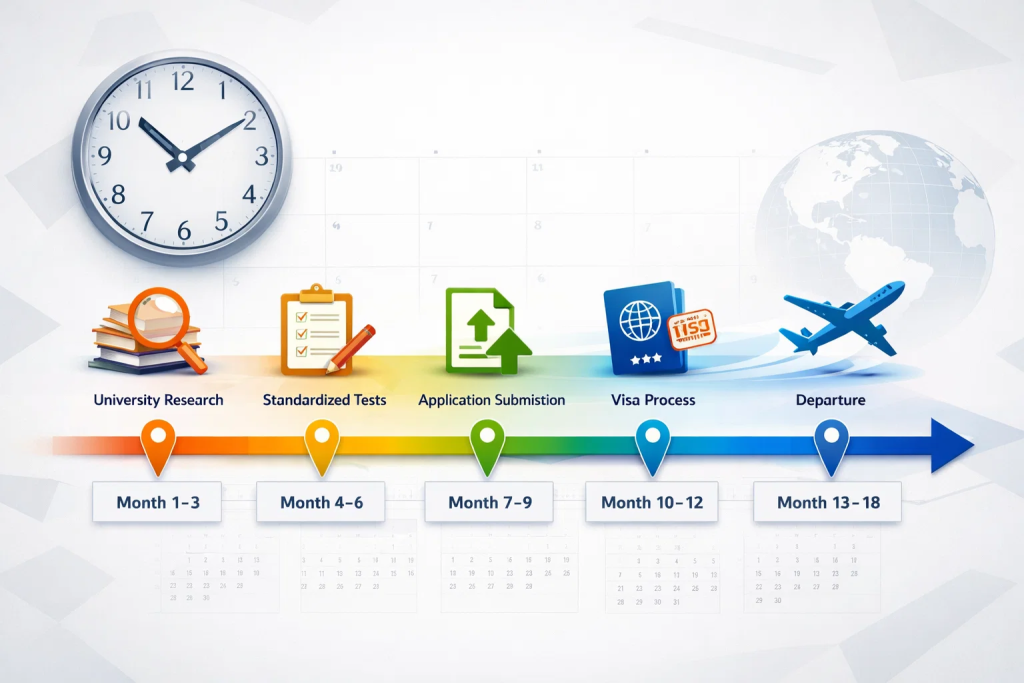
The application process for foreign universities typically begins 12-18 months before your intended start date. Most universities operate on two major intake cycles: Fall (August-September) and Spring (January-February), with Fall being the primary intake offering more program options and scholarship opportunities.
Critical Timeline Milestones:
18-15 Months Before Departure: Begin researching universities and programs aligned with your academic goals and career aspirations. This research phase should encompass university rankings, program curriculum, faculty expertise, alumni networks, and post-graduation employment prospects.
15-12 Months Before: Register for standardized tests including IELTS, TOEFL, GRE, GMAT, or SAT depending on your chosen program and destination. Understanding study abroad visa requirements for Indian students early in your planning process helps you align your preparation with specific country regulations.
12-9 Months Before: Complete your English proficiency and standardized tests, finalize your university shortlist, and begin drafting your statement of purpose and essays. If you’re planning to prepare for IELTS at home, allocate sufficient time for structured preparation.
9-6 Months Before: Submit your applications, ensuring all required documents are authenticated and translated where necessary. Most competitive programs have earlier deadlines, so prioritize applications for your top-choice universities.
6-3 Months Before: Track application status, respond to any university queries, prepare for interviews if required, and begin the financial documentation process.
3-1 Months Before: Accept your offer, pay deposits, apply for student visa, arrange accommodation, and complete pre-departure preparations.
Selecting the right university extends far beyond prestige rankings—it’s about finding institutions that align with your academic objectives, financial capacity, career goals, and personal preferences. When learning how to choose the right country to study abroad, consider factors like immigration policies, work opportunities, and post-study pathways.
Key Research Parameters:
Academic Excellence: Examine program-specific rankings rather than overall university rankings. A university ranked lower overall might have a stellar department in your field of interest. Review faculty credentials, research output, and industry partnerships that enhance learning outcomes.
Accreditation and Recognition: Verify that your chosen program holds relevant professional accreditations and is recognized by regulatory bodies in India, particularly important for professional courses like medicine, engineering, and business.
Location and Living Environment: Consider climate, cost of living, cultural diversity, safety, and distance from major cities. Urban universities offer extensive networking opportunities while smaller college towns provide focused academic environments with lower living expenses.
Employment Outcomes: Investigate placement statistics, average starting salaries, alumni network strength, and partnerships with industry leaders. Universities with robust career services and strong employer relationships significantly enhance your job prospects.
Support Services for International Students: Evaluate orientation programs, academic support, mental health resources, cultural integration initiatives, and dedicated international student offices that facilitate smooth adaptation to your new environment.
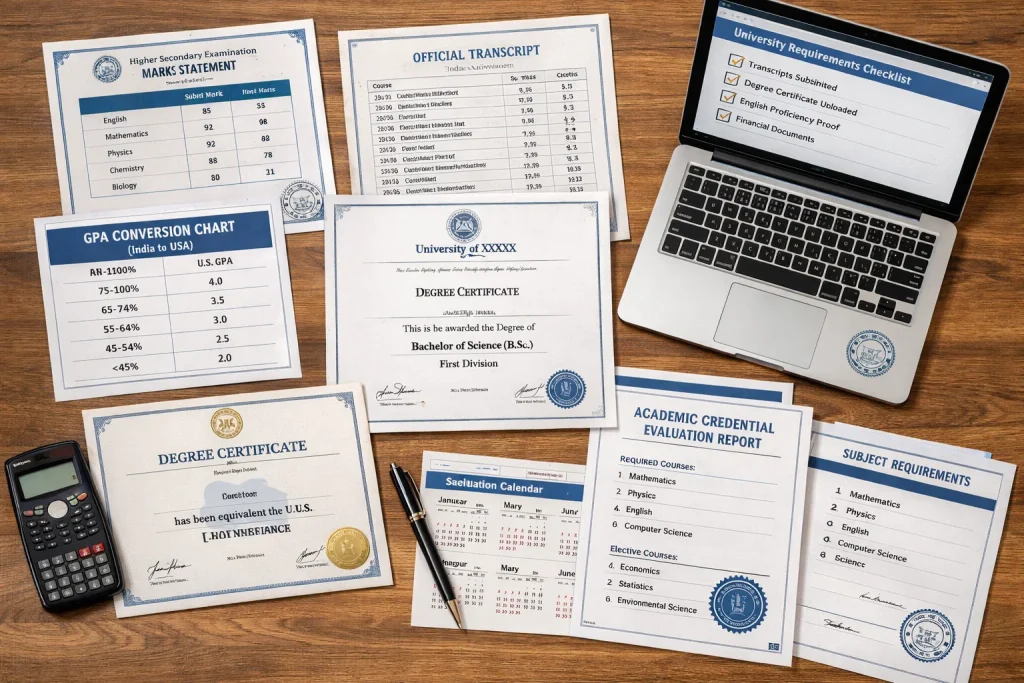
Foreign universities assess Indian students’ academic credentials through a comprehensive evaluation process that examines both quantitative performance and qualitative achievements throughout your educational journey.
Academic Prerequisites:
Grade Conversion: Indian percentage systems differ from international GPA scales. Most universities require your marks to be converted using specific conversion formulas—typically, 60% equals approximately 3.0 GPA, though this varies by institution. Professional credential evaluation services provide authenticated conversions accepted by universities worldwide.
Subject-Specific Requirements: Technical programs often mandate specific subject prerequisites. Engineering programs require strong foundations in mathematics and physics, medical programs demand biology and chemistry background, while business programs may require mathematics or statistics coursework.
Educational Progression: Universities examine your academic trajectory—consistent improvement demonstrates resilience and adaptability, while declining grades may raise concerns requiring explanation in your application.
Additional Qualifications: Relevant certifications, online courses from recognized platforms, research projects, internships, and practical experiences significantly strengthen applications, particularly for competitive programs where academic scores alone don’t differentiate candidates.
Demonstrating English proficiency stands as a non-negotiable requirement for studying abroad, with most universities accepting IELTS, TOEFL, PTE, or Duolingo English Test scores. However, some programs offer alternatives for students who meet specific criteria.
Standard Score Requirements:
Undergraduate programs typically require IELTS 6.0-6.5 (TOEFL 79-90), while postgraduate programs demand IELTS 6.5-7.5 (TOEFL 90-110). Competitive programs at top universities often set higher thresholds, with MBA and law programs frequently requiring IELTS 7.5+ or TOEFL 105+.
Section-Wise Requirements: Beyond overall scores, universities often specify minimum scores for individual components (Reading, Writing, Listening, Speaking). These section requirements ensure balanced language competence rather than compensating weak areas with strong performance elsewhere.
Test Validity: Language test scores remain valid for two years from the test date. Plan your test timing strategically to ensure validity throughout your application and visa process. For students exploring alternative pathways, opportunities to study nursing in the UK without IELTS exist under specific circumstances, though language proficiency remains essential for academic success.
English Medium Exemptions: Students who completed their entire previous education in English medium may qualify for exemptions at select universities. This typically requires certificates from your educational institution confirming English as the medium of instruction.

Meticulous document preparation forms the foundation of successful applications. Avoiding common mistakes students make when applying to foreign universities requires understanding precise documentation requirements and submission formats.
Core Documentation Package:
Academic Transcripts: Official mark sheets and certificates from all previously attended institutions, attested by the issuing authority. Universities require complete academic records from Class 10 onwards, including any diploma or certificate courses completed.
Degree Certificates: Provisional or final degree certificates authenticated by your university registrar. For students currently pursuing their degree, a provisional certificate or expected graduation letter from your institution suffices.
Passport: Valid passport with at least 18-24 months validity beyond your intended program completion date. Ensure adequate blank pages for visa stamps and travel endorsements.
English Proficiency Scores: Official score reports sent directly from testing agencies to your chosen universities. Most universities accept electronic score reports, though some require physical copies.
Standardized Test Scores: GRE, GMAT, SAT, or ACT scores sent through official channels from testing bodies. Many universities now accept self-reported scores during application with official verification required only upon admission.
Passport-Size Photographs: Recent color photographs meeting specific dimension requirements (typically 35mm x 45mm), though many applications now operate entirely digitally.
Statement of Purpose: A compelling narrative explaining your academic journey, career aspirations, reasons for choosing the specific program and university, and how the program aligns with your goals.
Letters of Recommendation: Typically 2-3 letters from professors or professional supervisors who can substantiate your academic capabilities, work ethic, and potential for success in your chosen field.
Resume/Curriculum Vitae: Comprehensive document highlighting academic achievements, work experience, research projects, publications, volunteer work, extracurricular activities, and relevant skills.
Portfolio (if applicable): Required for creative programs including architecture, design, fine arts, and media studies. Portfolios should demonstrate technical skills, creative thinking, and stylistic development.
Work Experience Certificates: For postgraduate programs, particularly MBA or professional master’s degrees, detailed employment certificates specifying your role, responsibilities, duration, and achievements.
Your Statement of Purpose (SOP) represents your opportunity to speak directly to the admissions committee, transcending grades and test scores to reveal your personality, motivations, and potential contributions to the university community.
Essential SOP Components:
Compelling Introduction: Open with a memorable anecdote, significant experience, or thought-provoking question that captures attention while establishing context for your academic journey and career aspirations.
Academic Background and Achievements: Discuss your educational foundation, highlighting specific courses, projects, or research experiences that sparked your interest in your chosen field and prepared you for advanced study.
Professional Experience (if applicable): Explain how your work experience revealed knowledge gaps that motivated you to pursue further education, specific challenges you encountered that the program will help you address, and skills you’ve developed that will enhance classroom discussions.
Program-Specific Interest: Demonstrate thorough research by mentioning specific courses, faculty members, research facilities, or unique program features that attracted you. Generic statements that could apply to any university weaken your application significantly.
Career Goals: Articulate clear short-term and long-term career objectives, explaining how the program serves as a crucial stepping stone toward achieving these goals. Connect your aspirations to broader industry trends or societal needs.
Unique Contributions: Highlight what distinctive perspectives, experiences, or skills you’ll bring to the classroom and campus community. Universities seek diversity of thought and experience that enriches peer learning.
Conclusion: Reinforce your enthusiasm, readiness for the academic challenge, and alignment between your goals and the program’s offerings. End with a forward-looking statement that leaves a positive, lasting impression.

Letters of Recommendation (LORs) provide third-party validation of your capabilities, character, and potential for success in your chosen program. Strategic recommender selection and preparation significantly influence LOR quality and impact.
Selecting Ideal Recommenders:
Choose individuals who know you well professionally or academically and can provide specific examples illustrating your strengths. A professor who taught you in multiple courses and supervised your project offers more valuable insights than a renowned professor who barely knows you.
Academic Recommenders: Select faculty members who taught you in relevant courses, supervised your research or thesis, or mentored you in academic pursuits. They should specifically address your intellectual curiosity, analytical abilities, class participation, and academic potential.
Professional Recommenders: For postgraduate programs, supervisors or managers who directly oversaw your work provide credible assessments of your professional competencies, work ethic, problem-solving abilities, and growth potential.
Requesting Recommendations Effectively:
Approach potential recommenders at least 2-3 months before deadlines, providing them ample time for thoughtful composition. Share your resume, statement of purpose, program details, and specific qualities or experiences you’d like them to highlight.
Supporting Your Recommenders: Provide a comprehensive information packet including university submission procedures, deadline dates, and any specific questions or criteria the university requires the recommendation to address.
Most foreign universities utilize online application portals where you’ll create an account, complete various sections, upload documents, and submit application fees. Understanding portal navigation and submission requirements prevents costly errors.
Application Components:
Personal Information: Complete accurate details including full name (as per passport), date of birth, contact information, citizenship, and demographic data required for institutional reporting.
Educational History: List all institutions attended with dates, degrees earned or in progress, and academic performance. Some universities require detailed course-by-course listings of all completed coursework.
Test Scores: Self-report your English proficiency and standardized test scores, ensuring accuracy as discrepancies between reported and official scores may result in application rejection.
Program Selection: Specify your intended program, specialization, and intake term. Some universities allow alternative program choices, ensuring consideration even if your first-choice program reaches capacity.
Essays and Supplementary Questions: Many universities require additional essays addressing specific prompts or supplementary information about your background, experiences, or perspectives on particular issues.
Application Fee Payment: Fees typically range from $50-$150 per application, payable via international credit/debit card or wire transfer. Some universities offer fee waivers for students demonstrating financial need.
Application Tracking: After submission, regularly monitor your application portal and email for requests for additional information, interview invitations, or application status updates. Prompt responses to university communications demonstrate your serious interest.

Universities and immigration authorities require comprehensive proof of your ability to finance your education and living expenses throughout your program duration. Inadequate financial documentation ranks among the primary causes of visa rejections for Indian students.
Required Financial Evidence:
Bank Statements: Minimum 6-12 months of bank statements showing consistent balance history. Sudden large deposits appearing immediately before application raise suspicions of borrowed funds rather than genuine financial capacity.
Sponsorship Letters: If parents, relatives, or external sponsors fund your education, notarized sponsorship letters declaring their willingness and ability to support your education, accompanied by their income proof and bank statements.
Education Loans: Sanctioned loan letters from recognized financial institutions specifying loan amount, terms, and disbursement schedule. Many countries accept approved education loans as legitimate proof of financial capacity.
Income Certificates: Income tax returns, salary certificates, or business financial statements of your sponsors demonstrating consistent income streams sufficient to support education expenses without financial hardship.
Scholarship Awards: Official scholarship award letters clearly stating scholarship amount, duration, and any conditions attached. Scholarships significantly strengthen both applications and visa cases while reducing financial burden.
Understanding study abroad budget planning helps families prepare comprehensive financial documentation that satisfies university and immigration requirements while ensuring comfortable living arrangements throughout the study period.

After securing admission, obtaining your student visa represents the final crucial step before beginning your international education journey. Each country maintains distinct visa procedures, requirements, and processing timelines that demand careful attention and meticulous preparation.
Universal Visa Requirements:
Valid Passport: Passport with adequate validity extending beyond your program completion date, with sufficient blank pages for visa stamps and immigration endorsements.
University Acceptance Letter: Official admission letter specifying program details, duration, and commencement date. Many countries require specific terminology in acceptance letters for visa eligibility.
Financial Proof: Comprehensive documentation demonstrating your ability to cover tuition fees and living expenses throughout your program duration without recourse to unauthorized employment.
Academic Credentials: Complete educational certificates and transcripts that formed the basis of your university application, properly authenticated and translated where necessary.
Language Proficiency: English test scores meeting visa threshold requirements, which may differ from university admission requirements.
Medical Examination: Health certificates from approved panel physicians confirming you meet health requirements and don’t pose public health risks. Some countries require specific vaccination records or medical insurance.
Biometrics and Interview: Most countries require biometric data submission and may conduct visa interviews assessing your genuine student intent, ties to home country, and understanding of your chosen program.
For country-specific guidance, including detailed documentation checklists, reviewing comprehensive resources like the Canada study permit documents for Indian students provides valuable insights into meeting precise visa requirements that ensure application success.
Receiving your admission offer marks a significant milestone, yet several critical steps remain before you embark on your international education journey.
Immediate Actions:
Accept Your Offer: Formally accept your admission within the specified deadline, typically requiring deposit payment that secures your place and initiates administrative processes including student ID generation and email account creation.
Accommodation Arrangements: Research housing options including on-campus residence halls, off-campus apartments, or homestay arrangements. University accommodation typically offers convenience and community building opportunities, particularly beneficial during your initial adjustment period.
Financial Arrangements: Finalize education loan disbursement, arrange foreign exchange for initial expenses, open international bank accounts or obtain forex cards for convenient financial transactions abroad.
Health Insurance: Purchase comprehensive health insurance covering your entire study period. Many universities mandate specific insurance policies or offer university-sponsored plans as enrollment prerequisites.
Pre-Departure Orientation: Attend university-organized pre-departure sessions, connect with current students or alumni from India at your destination university, and join relevant social media groups facilitating peer connections and practical guidance.
Travel Planning: Book flights with adequate arrival buffer before orientation programs, arrange airport pickup services if available, and inform your university of travel details for coordination purposes.
Seeking guidance from experienced education abroad counselling professionals can help you navigate these post-acceptance procedures smoothly, ensuring you arrive at your destination fully prepared and confident.
Begin your application process at least 12-18 months before your intended start date. This timeline allows adequate preparation for standardized tests, thorough university research, thoughtful application composition, and addressing any unexpected challenges without deadline pressure.
Yes, applying to 6-10 universities with varying selectivity levels is recommended—include reach universities (competitive admissions), target universities (realistic admission chances), and safety universities (strong admission likelihood). This strategy maximizes your opportunities while managing expectations.
If your grades fall slightly below requirements, exceptional standardized test scores, relevant work experience, strong recommendations, and compelling statements explaining circumstances can sometimes compensate. Some universities offer conditional admission requiring foundational courses before full program entry.
Requirements vary by university and country. Most universities accept self-attested documents for initial application evaluation, requesting official verified documents only upon admission. However, visa applications typically require authentication from authorized authorities.
Most countries permit international students to work part-time (typically 20 hours weekly) during academic sessions and full-time during scheduled breaks. Specific regulations vary by country and visa conditions—ensure you understand and comply with your destination country’s work restrictions.
Visa rejections can result from insufficient financial proof, inadequate documentation, or interview performance concerns. You can typically reapply after addressing rejection reasons, providing additional evidence, or clarifying misunderstandings. Professional guidance helps strengthen reapplications significantly.
No, you cannot apply for a student visa without an official admission letter from a recognized university. The admission letter serves as primary evidence of your genuine student intent and is mandatory for all student visa applications.
Direct applications give you complete control and save agent fees, but require thorough research and meticulous attention to detail. Reputable education consultants provide valuable guidance, especially when applying to multiple countries or navigating complex requirements, though you should verify their credentials and track record.
Some universities allow course changes before enrollment, but this depends on their policies and whether you meet the new program’s admission requirements. Contact the admissions office promptly if you wish to change your course, as documentation and visa implications may require attention.
Contact the university’s admissions office immediately to inquire about late application possibilities. Some universities accept late applications on a case-by-case basis, particularly if they haven’t reached enrollment capacity. Alternatively, consider applying for the next intake cycle.
Applying to foreign universities from India represents a transformative journey demanding meticulous planning, comprehensive preparation, and unwavering determination. By following this structured approach—understanding timelines, researching thoroughly, preparing documentation meticulously, crafting compelling narratives, and navigating visa procedures competently—you position yourself for admission success at your dream university.
Remember that successful applicants don’t simply meet requirements; they strategically present themselves as ideal candidates who will contribute meaningfully to their chosen university community while achieving personal academic and professional aspirations. Your international education journey begins with that crucial first step—thorough preparation and informed decision-making pave the path toward global academic excellence.
Whether you’re considering pursuing MBBS abroad, specialized professional programs, or advanced research degrees, understanding the application process comprehensively and leveraging expert guidance through career counselling ensures your international education aspirations transform into reality with confidence and clarity.