
Thousands of Indian medical aspirants face the harsh reality of limited MBBS seats in government colleges despite qualifying NEET. With intense competition and skyrocketing fees in private institutions, the dream of becoming a doctor feels increasingly distant. The heartbreak of missing admission by a few marks shouldn’t end your medical career aspirations.
Studying MBBS abroad presents a viable, affordable alternative that doesn’t compromise on education quality. International medical universities offer WHO and NMC-recognized degrees, world-class infrastructure, and global career opportunities that transform your medical education journey into an enriching international experience.
This comprehensive guide reveals 15+ proven benefits of studying MBBS abroad that make it the smartest choice for Indian medical students seeking quality education, global recognition, and successful medical careers without the astronomical fees of private medical colleges in India.
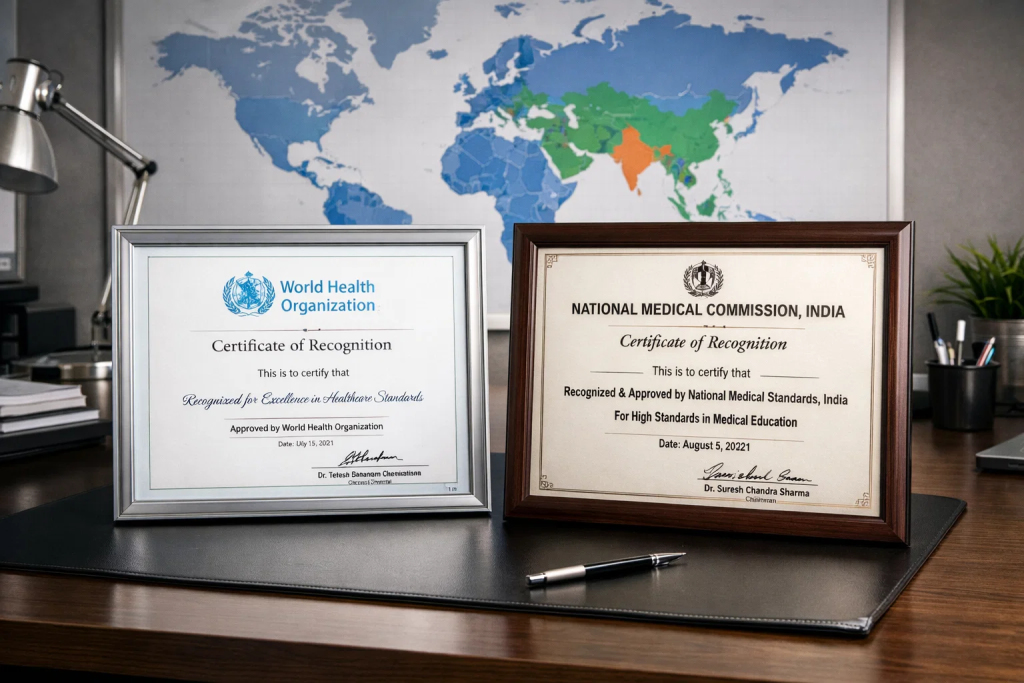
The primary benefit of studying MBBS abroad lies in receiving globally recognized medical degrees from universities approved by the World Health Organization (WHO), National Medical Commission (NMC), and respective national medical councils. These accreditations ensure your medical degree holds value across continents.
International medical universities maintain rigorous academic standards that often surpass those of many private medical colleges in India. Countries like Russia, the Philippines, Georgia, and the UK have decades-long traditions of medical excellence, producing thousands of successful doctors now practicing worldwide.
When you choose the best countries to study MBBS abroad, you’re investing in education systems recognized globally, allowing you to practice medicine in India after clearing FMGE/NExT or pursue international medical careers in countries like the USA, UK, Canada, and Australia through their respective licensing examinations.
The international curriculum emphasizes evidence-based medicine, critical thinking, and clinical reasoning skills that prepare you for modern healthcare challenges. This global perspective differentiates international medical graduates from those trained in limited domestic environments.
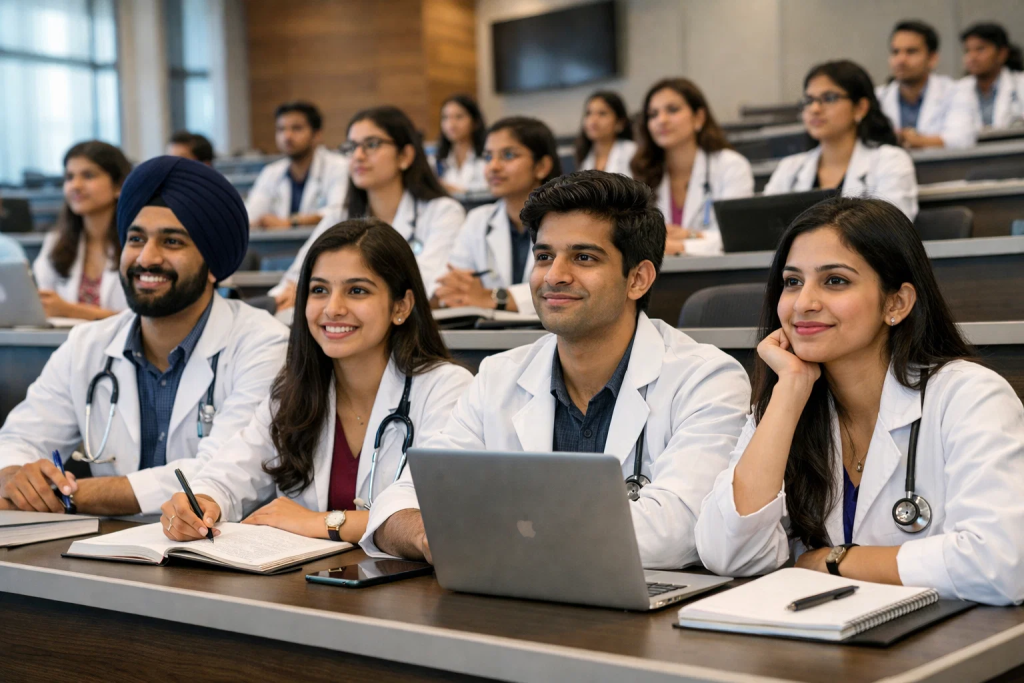
Education affordability represents one of the most compelling benefits of studying MBBS abroad for middle-class Indian families. While private medical colleges in India demand prohibitive fees that can financially cripple families, international universities offer quality medical education at significantly more reasonable rates.
MBBS in Russia exemplifies this affordability advantage, providing comprehensive six-year programs including internship at rates substantially lower than Indian private medical colleges. This affordability extends across popular destinations like the Philippines, Georgia, Kazakhstan, and China.
Beyond tuition fees, the overall living expenses in many MBBS destinations remain manageable compared to major Indian cities. Affordable accommodation, subsidized student cafeterias, and reasonable healthcare make international medical education financially accessible to middle-class families without compromising quality.
Indian students can access education loans from nationalized banks specifically designed for foreign medical education. Many universities also offer installment payment options and scholarship programs based on academic merit, further reducing financial burden on families.
The return on investment becomes evident when you consider global career opportunities, higher earning potential internationally, and the quality of education received. The comprehensive medical training abroad often exceeds what’s available at similarly priced private institutions in India.

Language barriers no longer hinder Indian students from pursuing quality medical education abroad. Most reputable international medical universities offer complete MBBS programs in English medium, eliminating the need to learn foreign languages before beginning medical studies.
Countries like the Philippines, being former American colonies, conduct medical education entirely in English from lectures to clinical interactions. This English immersion ensures you grasp complex medical concepts thoroughly without translation difficulties. Russian medical universities also offer dedicated English-medium programs specifically designed for international students.
The benefit extends beyond classroom learning. Clinical rotations, patient interactions, and medical documentation in English prepare you for international medical licensing examinations like USMLE, PLAB, and AMC, which are conducted in English. This continuous English medical education gives you a competitive advantage in global healthcare markets.
Even in countries where English isn’t the native language, universities provide language support courses to help students communicate effectively during hospital rotations. However, the core medical curriculum remains in English, ensuring academic excellence without language compromise.
English-medium instruction also facilitates better understanding of international medical literature, research papers, and continuing medical education resources throughout your medical career, keeping you updated with global medical advancements.
One of the most attractive benefits of studying MBBS abroad involves simplified admission procedures without additional entrance examinations. While Indian medical aspirants face multiple entrance exams beyond NEET for various universities, international medical universities offer direct admission based solely on NEET qualification.
According to NMC guidelines, Indian students only need valid NEET scores to pursue MBBS abroad. Universities don’t conduct separate entrance tests, eliminating the stress of preparing for multiple competitive examinations simultaneously. This streamlined admission process saves time, effort, and coaching expenses.
The admission criteria remain straightforward: 50% aggregate in Physics, Chemistry, and Biology for general category students (40% for SC/ST/OBC categories), valid NEET qualification, and age requirement of 17 years by December 31st of admission year. Once these basic eligibility criteria are met, admission procedures progress smoothly.
This benefit particularly helps students who qualified NEET but couldn’t secure admission in Indian government colleges due to intense competition. Rather than wasting a year attempting NEET again, these students can immediately begin their medical education abroad without losing precious time.
Expert study abroad consultancy services assist students with documentation, university selection, and admission processes, ensuring smooth transitions from NEET qualification to international medical university enrollment without unnecessary complications.
International medical universities invest heavily in infrastructure, providing students with state-of-the-art facilities that enhance learning experiences significantly. Modern simulation labs, advanced anatomical theaters, well-equipped hospitals, and digital learning resources create ideal environments for comprehensive medical education.
Medical universities abroad utilize innovative teaching methodologies including problem-based learning, simulation-based training, virtual reality anatomy lessons, and interactive digital platforms that make complex medical concepts easier to understand. These pedagogical approaches surpass traditional lecture-based methods common in many Indian institutions.
The availability of modern diagnostic equipment, advanced surgical simulation systems, and comprehensive medical libraries ensures students receive hands-on training with technology they’ll encounter in real medical practice. This practical exposure builds confidence and competence before actual patient interactions.
International universities maintain low student-to-faculty ratios, ensuring personalized attention and mentorship. Professors often have international medical experience, bringing global perspectives and diverse clinical knowledge to classroom discussions. This quality faculty interaction significantly impacts learning outcomes.
Regular updates to curricula incorporating latest medical research, treatment protocols, and technological advancements keep international medical education current and relevant. Students graduate with contemporary medical knowledge aligned with global healthcare standards.
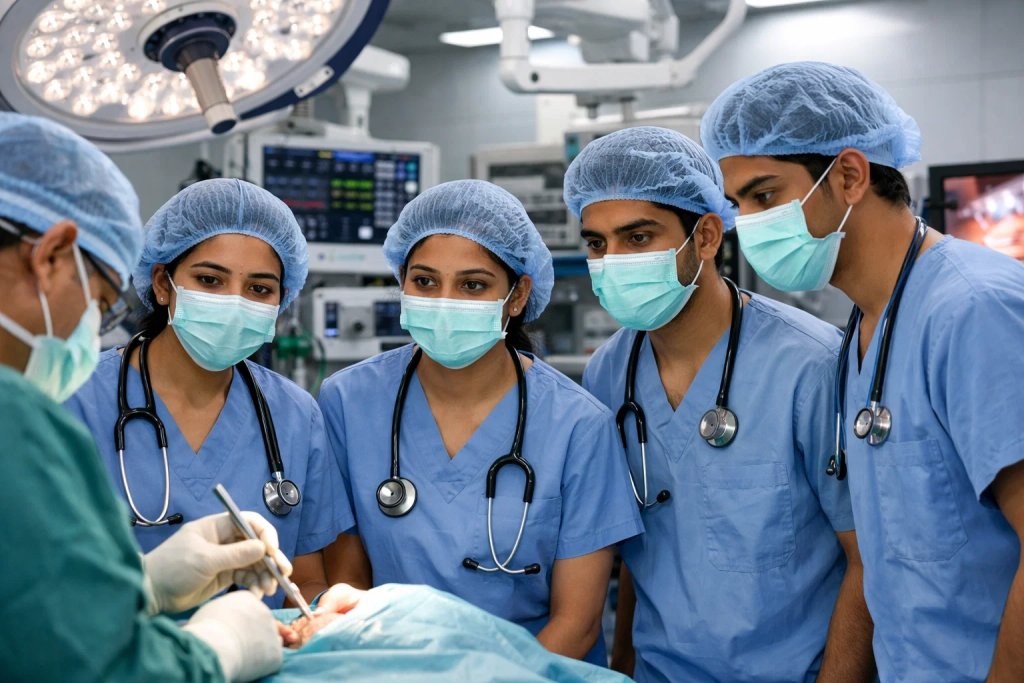
Comprehensive clinical training represents one of the most significant benefits of studying MBBS abroad. International medical programs emphasize extensive practical experience in university-affiliated hospitals, exposing students to diverse patient populations, varied disease presentations, and different healthcare delivery systems.
Starting from early academic years, students participate in hospital rotations across multiple departments including internal medicine, surgery, pediatrics, obstetrics, gynecology, psychiatry, and emergency medicine. This early clinical exposure builds diagnostic skills and patient interaction confidence that purely theoretical education cannot develop.
International hospitals often treat complex medical cases that provide invaluable learning opportunities. Students encounter rare diseases, advanced surgical procedures, and sophisticated treatment protocols that expand their clinical knowledge beyond textbook descriptions. This diverse exposure prepares graduates for any medical challenge.
The clinical training includes supervised patient examinations, case presentations, diagnostic procedure participation, and even assisting in surgeries under expert supervision. This hands-on experience develops clinical competence and professional confidence essential for successful medical practice.
Many international medical universities maintain teaching hospitals equipped with modern medical technology where students learn to operate advanced diagnostic and therapeutic equipment. This technological familiarity gives international medical graduates advantages when practicing in modern healthcare settings.

Studying MBBS abroad offers immersive multicultural experiences that shape well-rounded medical professionals. International universities attract students from dozens of countries, creating vibrant multicultural environments where you interact with peers from diverse backgrounds, religions, and cultures.
This cultural diversity extends valuable benefits beyond medical education. Understanding different cultural perspectives on health, illness, and medical treatment enhances your ability to provide culturally sensitive healthcare—an increasingly important skill in our globalized world. You develop cross-cultural communication skills invaluable in medical practice.
Exposure to international healthcare systems, treatment approaches, and public health challenges broadens your medical perspective beyond India’s healthcare context. You understand how different countries address similar medical problems, learning varied approaches to disease prevention, health promotion, and medical care delivery.
Living abroad independently develops personal growth, adaptability, and resilience—qualities essential for medical professionals facing challenging situations. You learn to navigate unfamiliar environments, solve problems independently, and adapt to different social norms, building confidence and maturity.
Many international medical universities host large Indian student communities that provide cultural connection and support networks. You maintain cultural roots while experiencing global perspectives, achieving the best of both worlds in your medical education journey.
The admission process for MBBS abroad proves remarkably straightforward compared to the complex procedures of Indian medical colleges. Most international universities complete admissions within weeks rather than months, allowing students to secure seats quickly after NEET results.
Required documentation typically includes 10th and 12th mark sheets, NEET scorecard, passport, photographs, and medical fitness certificates. Unlike Indian medical college admissions involving multiple counseling rounds, provisional seat allocation, and uncertain outcomes, international university admissions offer direct confirmation, providing peace of mind.
Universities issue admission letters quickly after document verification, allowing students adequate time for visa processing, travel arrangements, and preparation. This transparency and efficiency reduce stress for students and families navigating international education.
Professional study abroad consultancy services simplify the admission process further by handling university communications, document preparation, application submissions, and follow-ups. Their expertise ensures error-free applications and faster admission confirmations.
The admission calendar for international medical universities often provides multiple intake opportunities throughout the year, offering flexibility that Indian medical college admissions lack. Students can choose admission timings that suit their preparation and convenience.
International medical degrees open diverse career pathways across global healthcare markets. Graduates can practice medicine in India after clearing FMGE/NExT or pursue lucrative medical careers in developed countries offering substantially higher income potential and professional growth opportunities.
The United States, United Kingdom, Canada, Australia, and Gulf countries actively seek qualified medical professionals. International medical graduates who clear respective licensing examinations (USMLE, PLAB, MCC, AMC) access healthcare systems offering world-class practice environments, cutting-edge technology, and excellent compensation packages.
Medical specialization opportunities expand significantly with international medical degrees. You can pursue postgraduate training in various countries, choosing specializations aligned with your interests and career aspirations. This global mobility provides flexibility unavailable to graduates restricted to single-country practice.
Beyond clinical practice, international medical degrees open opportunities in medical research, pharmaceutical industry, healthcare administration, public health organizations, medical education, and medical writing. The diverse skill set developed through international education positions you for varied healthcare sector roles.
Many international medical universities maintain strong alumni networks across continents, providing mentorship, job referrals, and professional connections that facilitate career advancement. These global professional networks prove invaluable throughout your medical career.
International medical universities actively engage in cutting-edge medical research, offering students opportunities to participate in research projects from early academic years. This research exposure develops critical thinking, scientific methodology understanding, and evidence-based medicine approaches essential for modern medical practice.
Students can collaborate with experienced researchers on clinical trials, epidemiological studies, laboratory research, and public health projects. Publishing research papers in international journals enhances your academic profile, improving prospects for competitive postgraduate programs and academic careers.
Access to well-funded research facilities, modern laboratory equipment, and international collaboration networks provides resources rarely available in many Indian institutions. You work with latest research technologies, contributing to medical knowledge advancement while developing research skills.
Many international universities encourage undergraduate research through dedicated research semesters, research assistant positions, and research grant opportunities. This institutional support helps motivated students pursue research interests alongside clinical training.
Research experience gained abroad proves invaluable when applying for residency programs, particularly in research-oriented specialties. Demonstrated research capability and publications significantly strengthen residency applications in competitive medical specializations worldwide.
Numerous scholarship opportunities make studying MBBS abroad even more financially accessible for deserving students. Many countries and universities offer merit-based scholarships, government-sponsored programs, and financial aid packages that substantially reduce education expenses.
Russia offers government scholarships for Indian students through bilateral educational agreements, covering tuition fees and providing monthly stipends for living expenses. These scholarships enable talented students from economically disadvantaged backgrounds to access quality medical education.
Universities in the Philippines, Georgia, Kazakhstan, and China offer various scholarship programs based on academic performance, NEET scores, and financial need. These scholarships can cover partial or complete tuition fees, significantly reducing financial burden on families.
Indian government initiatives and private organizations also provide scholarships for medical students pursuing education abroad. Research available scholarship opportunities early and apply for multiple programs to maximize financial assistance possibilities.
Even without scholarships, education loan facilities from Indian nationalized banks specifically designed for foreign medical education make MBBS abroad financially viable. Collateral-free loans up to significant amounts with reasonable interest rates ensure finances don’t hinder your medical education dreams.

Safety concerns naturally worry students and parents considering international education. However, popular MBBS destinations maintain excellent safety records and welcoming attitudes toward international students, particularly Indian medical students who form large student communities in these countries.
Universities provide secure on-campus accommodation with 24/7 security, CCTV surveillance, and student support services. Dedicated international student offices assist with adaptation challenges, addressing concerns promptly and ensuring comfortable living environments throughout your medical education.
Countries like Russia, the Philippines, Georgia, and European nations maintain low crime rates and stable political environments. Local populations generally welcome international students, and large Indian communities in university cities provide cultural connection and support networks.
Universities implement comprehensive student welfare programs including health insurance coverage, counseling services, academic support, and emergency assistance. These support systems ensure students feel secure and supported far from home.
Student-friendly visa policies in most MBBS destinations allow hassle-free travel between countries and home visits during academic breaks. This flexibility ensures you maintain family connections while pursuing international medical education without unnecessary visa complications.
International medical degrees provide structured pathways to medical licensure in multiple countries beyond India. The curriculum design, clinical training standards, and examination patterns align with international medical licensing requirements, facilitating smoother transitions to global medical practice.
Medical universities in countries like the Philippines, UK, and Australia follow curricula compatible with USMLE, PLAB, and AMC examination formats. This curricular alignment means your regular medical education simultaneously prepares you for international licensing examinations without requiring extensive additional preparation.
Many international universities offer dedicated coaching and support for students pursuing medical licensure in USA, UK, Canada, or Australia. Some institutions even arrange clinical electives in these countries, providing direct exposure to healthcare systems where you plan to practice.
The international clinical exposure, English-medium education, and global standard medical training significantly improve your performance in international medical licensing examinations. International medical graduates often demonstrate higher success rates in these examinations compared to those trained exclusively in limited domestic environments.
Understanding and working within different healthcare systems during your medical education develops adaptability that proves invaluable when transitioning to medical practice in new countries. You enter international medical markets with confidence and cultural competence that purely domestic training cannot provide.
The relationships developed during international medical education form valuable professional networks spanning continents. Your classmates from various countries become future medical professionals practicing worldwide, creating a global network of professional contacts beneficial throughout your medical career.
Alumni associations of international medical universities maintain active networks connecting graduates across countries. These networks facilitate job opportunities, collaboration opportunities, continuing medical education, and professional referrals that accelerate career growth.
Professors and clinical mentors from international medical schools often maintain extensive professional connections in global healthcare. Their recommendations and referrals can open doors to prestigious residency programs, research opportunities, and employment positions worldwide.
Attending international medical conferences, workshops, and continuing medical education programs becomes easier with global professional networks developed during medical school. These connections keep you updated with medical advancements and provide collaboration opportunities throughout your career.
Social and professional connections with medical professionals from diverse backgrounds enrich your understanding of global healthcare challenges and solutions. These perspectives prove invaluable when addressing complex medical problems requiring innovative approaches.

Navigating international medical education becomes significantly easier with expert study abroad consultancy support. Professional education consultants provide comprehensive guidance through every step—from university selection and admission procedures to visa processing, travel arrangements, and post-arrival settlement.
Experienced consultants understand nuances of different countries’ medical education systems, admission requirements, and career prospects. Their insights help you make informed decisions aligned with your academic profile, career goals, and financial circumstances, avoiding costly mistakes.
Documentation assistance ensures your applications meet all requirements without errors that could cause delays or rejections. Consultants manage communication with universities, handle procedural complexities, and keep you informed throughout admission processes.
Visa processing support includes application preparation, document verification, interview coaching, and follow-ups with embassies. This professional assistance significantly improves visa approval rates and reduces stress associated with visa procedures.
Post-arrival services including airport pickup, accommodation assistance, university orientation, and settling-in support ensure smooth transitions to international student life. Ongoing support throughout your medical education provides reassurance and assistance whenever challenges arise.
Yes, MBBS degrees from universities recognized by NMC (National Medical Commission) and listed in the World Directory of Medical Schools are valid in India. After completing MBBS abroad, you must clear FMGE (Foreign Medical Graduate Examination), now called NExT (National Exit Test), to practice medicine in India. NMC maintains an updated list of recognized foreign universities on its official website.
Indian students must complete 10+2 with Physics, Chemistry, and Biology/Biotechnology, securing minimum 50% aggregate marks for general category (40% for SC/ST/OBC, 45% for PWD). Valid NEET qualification is mandatory as per NMC guidelines. Students must be at least 17 years old by December 31st of admission year. No additional entrance examinations beyond NEET are required for MBBS abroad admission.
The best countries to study MBBS abroad for Indian students include Russia, the Philippines, Georgia, Kazakhstan, China, Ukraine, Kyrgyzstan, Bangladesh, and Nepal. These countries offer WHO and NMC-recognized medical universities with English-medium programs, quality education, affordable fees, and significant Indian student communities providing cultural support.
MBBS programs abroad typically require 5.5 to 6 years including mandatory internship. The academic program spans 54 months (4.5 years) followed by 12 months of compulsory internship as per NMC requirements. Some countries integrate internship throughout the program while others complete it in the final year.
Yes, international medical graduates can practice in the USA after clearing USMLE (United States Medical Licensing Examination) Steps 1, 2, and 3, followed by completing residency training in America. For the UK, you must clear PLAB (Professional and Linguistic Assessments Board) examinations and complete foundation training. Similar licensing pathways exist for Canada (MCC), Australia (AMC), and other countries.
Yes, various scholarship opportunities exist for Indian medical students studying abroad. Government scholarships through bilateral agreements (like India-Russia programs), university merit-based scholarships, need-based financial aid, and private organization scholarships reduce education expenses significantly. Students should research available scholarships early and apply for multiple programs to maximize financial assistance.
MBBS difficulty levels remain comparable globally as medical education follows international standards. However, MBBS abroad offers advantages including direct admission without additional entrance exams, better student-to-faculty ratios, advanced infrastructure, diverse clinical exposure, and English-medium instruction. The admission process is certainly easier compared to intense competition for limited seats in Indian government medical colleges.
Select universities recognized by NMC and WHO, listed in World Directory of Medical Schools, established for at least 10 years, offering English-medium instruction, and providing comprehensive clinical training. Consider factors including infrastructure, faculty quality, Indian student presence, safety, living conditions, and alumni success rates. Professional education consultancy guidance helps evaluate these factors and select universities matching your profile and aspirations.
MBBS abroad graduates can practice medicine in India after clearing FMGE/NExT, pursue international medical careers in USA, UK, Canada, Australia after respective licensing exams, work in Gulf countries, specialize in various medical fields globally, engage in medical research, join pharmaceutical industry, pursue healthcare administration, work in public health organizations, teach in medical colleges, or become medical writers. International exposure opens diverse career pathways unavailable to purely domestic medical graduates.
The benefits of studying MBBS abroad extend far beyond accessing quality medical education at affordable rates. International medical degrees provide global recognition, world-class infrastructure, diverse clinical exposure, and pathways to lucrative medical careers worldwide that transform your professional trajectory.
For Indian medical aspirants facing intense competition and limited opportunities domestically, MBBS abroad represents not a compromise but an enhancement—an opportunity to receive superior medical training in multicultural environments while building global professional networks. The comprehensive advantages make international medical education an intelligent choice for ambitious medical students.
With proper planning, expert guidance, and commitment to your medical education journey, studying MBBS abroad becomes your gateway to fulfilling medical career aspirations. The investment in international medical education pays lifelong dividends through exceptional training, global opportunities, and the satisfaction of serving humanity as a competent medical professional.
Take the first step toward your international medical education journey today. Research recognized universities, consult experienced education advisors, and transform your dream of becoming a doctor into reality through quality MBBS education abroad.